August 28, 2026
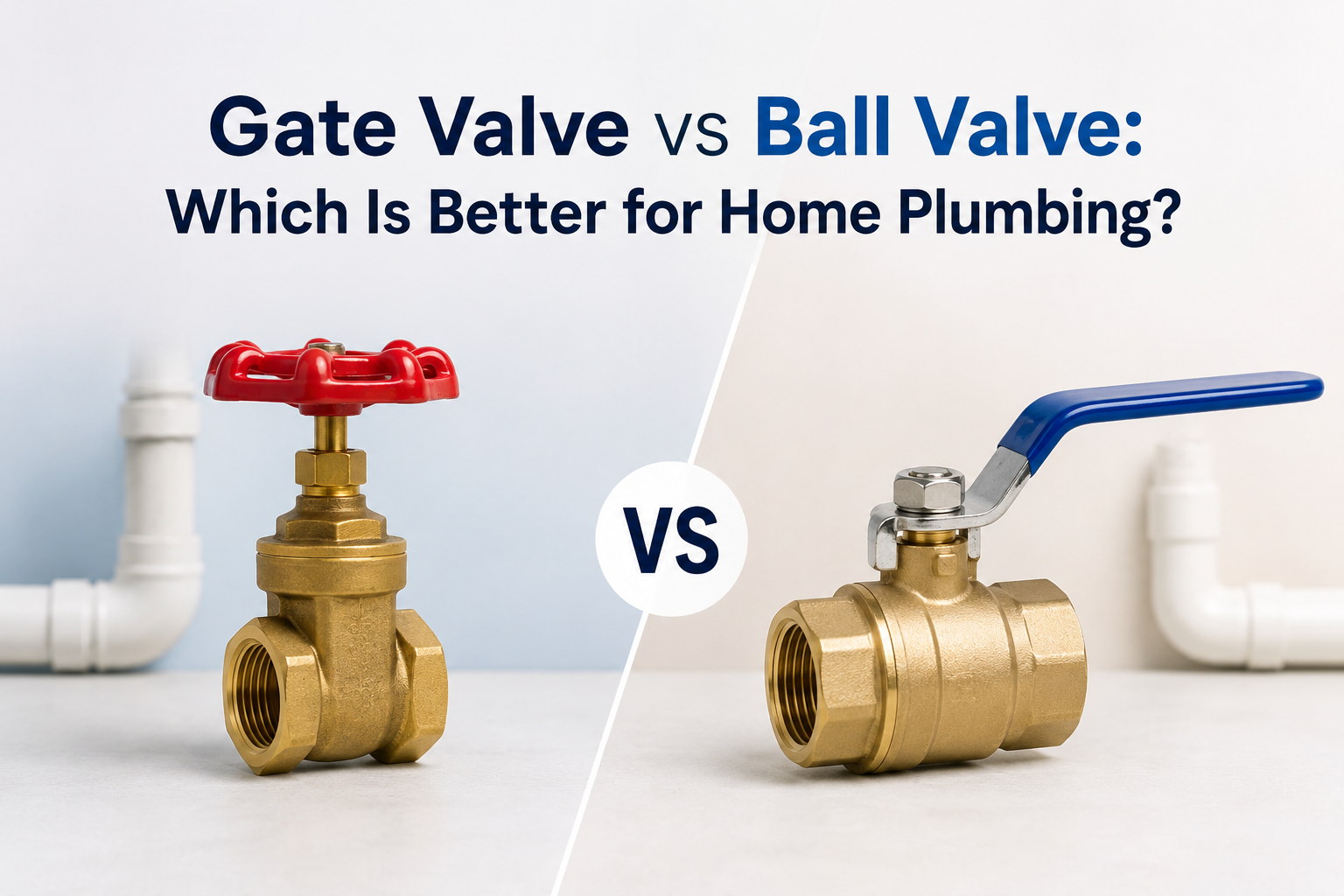
'Gate Valve vs Ball Valve: Which Is Better for Home Plumbing?
Quick Answer
For most homes, a ball valve is the easier and more reliable choice. A quarter turn of the handle stops the water, and you can tell right away whether it’s open or shut just by looking at it. Gate valves still work fine on bigger pipes or older setups, but they’re slower and take more effort. Your best pick really depends on your pipe size, your water pressure, and how often you’ll actually be using the valve.
What Is a Gate Valve?
A gate valve uses a flat metal gate to block or let through water. You turn the handle, and that lifts or lowers the gate inside the pipe.
When the gate is all the way up, water flows through almost like it isn’t even there. When the gate drops all the way down, the water stops completely.
You’ll find gate valves in older homes a lot. They show up on main water lines, underground pipes, and big storage tanks.
Opening or closing one fully takes several full turns of the handle. That’s slower than a ball valve, but it does give you a clear, steady feel of the gate moving into place.
What Is a Ball Valve?
A ball valve uses a round ball with a hole drilled through the middle. Turn the handle, and the ball spins inside the valve to line up or block that hole.
When the handle sits in line with the pipe, water flows straight through. Turn it a quarter turn, and the ball rotates just enough to seal off the hole completely.
That single quarter turn is why people love ball valves. One quick move, and the water’s fully off.
You’ll see ball valves on water heaters, kitchen and bathroom lines, storage tanks, and the main shutoff for a home.
What’s the Difference Between a Gate Valve and a Ball Valve?
The clearest difference is speed. A ball valve needs one quarter turn. A gate valve needs several full turns.
Speed matters most in an emergency. If a pipe bursts, a ball valve can cut the water off in seconds, while a gate valve might still be halfway closed.
Flow when fully open is actually pretty similar between the two. A good, full-bore ball valve often matches the pipe’s inside width closely, so water moves through with little blockage. A gate valve, fully open, also lets water pass with very little resistance.
What’s moving inside is where they really differ. A gate valve has a flat gate that slides up and down. A ball valve has a round ball that spins, sealed by rubber or plastic seats pressed against it.
Which Valve Is Better for Home Plumbing?
For most jobs around the house, a ball valve is the better fit. It shuts off fast, and one glance at the handle tells you if it’s open or closed.
That makes ball valves a solid choice for your main water line, bathroom pipes, kitchen lines, water heaters, and storage tanks.
That said, a gate valve can still earn its place. If your home already has one on a large pipe and it’s working fine, there’s usually no reason to rip it out and replace it.
The right valve for your home really comes down to a few things:
- Pipe size
- Water pressure
- Water temperature
- Where the valve sits in your plumbing
- How often you’ll need to use it
When Should You Use a Ball Valve at Home?
Reach for a ball valve whenever you need a fast, dependable shutoff. It’s built for a quick, full stop, not for gentle, gradual adjustments.
On a water tank, a ball valve lets you isolate it fast when repairs come up. It also works well near pumps and water heaters, as long as the pressure and temperature ratings match your setup.
For kitchen and bathroom supply lines, small ball valves give you quick, right-where-you-need-it control.
And in an emergency, ball valves really shine. One quarter turn can stop a leak faster than several slow turns on a gate valve ever could.
When Should You Use a Gate Valve at Home?
A gate valve makes the most sense on large pipes, or in existing systems that already have one installed and working. It’s built to be fully open or fully closed, not something in between.
When it’s fully open, a gate valve lets water rush through with very little blockage, which makes it a strong choice for high-volume water lines.
One thing to avoid: don’t leave a gate valve partly open to try to control pressure. A half-open gate sits directly in the path of fast-moving water, and over time that wears it down.
If your main line already has a working gate valve, you don’t need to swap it out. But if you do decide to switch to a ball valve later, make sure the new one matches your pipe size, connection type, and pressure rating.
A Simple Example
Picture the main water pipe coming into your house. If a leak springs up or you need to make a repair, you need a fast way to shut off the whole home’s water supply.
A ball valve makes that easy. One quarter turn, and you can see right away that the water’s off.
Now picture a large water line with a gate valve that’s already installed and doing its job well. There’s usually no real reason to swap it out just because ball valves happen to be more popular these days.
The right choice always comes down to the job the valve needs to do, not which type is trending.
What Should You Check Before Buying a Plumbing Valve?
Before picking up a gate valve or a ball valve, run through these five checks:
- Pipe diameter and connection type. The valve has to match your existing pipe.
- Pressure rating. Home water pressure can swing a lot depending on your building and pump setup.
- Temperature rating. This matters most on hot water lines, since heat affects the seals.
- Material. Brass, stainless steel, and PVC each suit different jobs and water types.
- Price versus fit. A cheap valve that doesn’t match your setup can leak or fail early, costing you more later.
Gate Valve or Ball Valve: What’s the Final Answer?
For most home shutoff points, a ball valve is the best pick. It’s fast to operate, easy to check at a glance, and fits most water supply jobs around the house.
Gate valves still have their place, especially on large pipes and in older systems that already use them.
If you’re replacing a valve, don’t choose based on the name alone. Check the pipe size, connection, water pressure, temperature, and material first.
At M. Ismail Jee Sanitary, you’ll find plumbing and sanitary products from trusted brands for home and commercial use. Not sure which valve fits your pipe? Contact us and we’ll help you find the right valve for your water line.
FAQs
Is a ball valve better than a gate valve for home plumbing?
Yes, for most homes. A ball valve shuts off water faster and shows its position at a glance. A gate valve still works well on large pipes and older systems.
How many turns does it take to close a ball valve?
Just one quarter turn. That’s much faster than a gate valve, which needs several full turns to close completely.
Can I leave a gate valve half open?
No. A gate valve should stay fully open or fully closed. A half-open gate sits in the path of fast water and wears out faster over time.
Can a ball valve control water pressure?
Not well. A ball valve can restrict flow when partly closed, but it’s built for shutoff, not fine-tuned pressure control.
What size valve do I need for my home?
Match the valve to your pipe’s inside diameter and your water pressure rating. Check both before buying, since sizes and ratings vary by brand.
Are ball valves good for hot water lines?
Yes, as long as the valve’s temperature rating matches your hot water system. Always check the rating before installing it on a hot line.

+92 21 35865636
Gallery